
Some trips ask you to show up and look around. These ask for more.
The parks in this guide span five countries — Chile, Canada, the United States, Iceland, and New Zealand. Each one is among the most tightly regulated wild places on Earth. Those regulations exist because the terrain is genuinely dangerous, the ecosystems are fragile, and demand from visitors outpaces what these places can absorb without hard limits.
What you get in return is access to a different category of landscape. Granite towers rising through Patagonian fog. A blue ice tunnel inside a living glacier. A fjord so wide and still that kayaking it feels disorienting. But arriving prepared — permits secured, gear sorted — is the difference between the trip you planned and the one you drive away from.
Trekking and High-Altitude Routes for Serious Hikers
Torres del Paine, Chile: Granite Towers and the W Trek
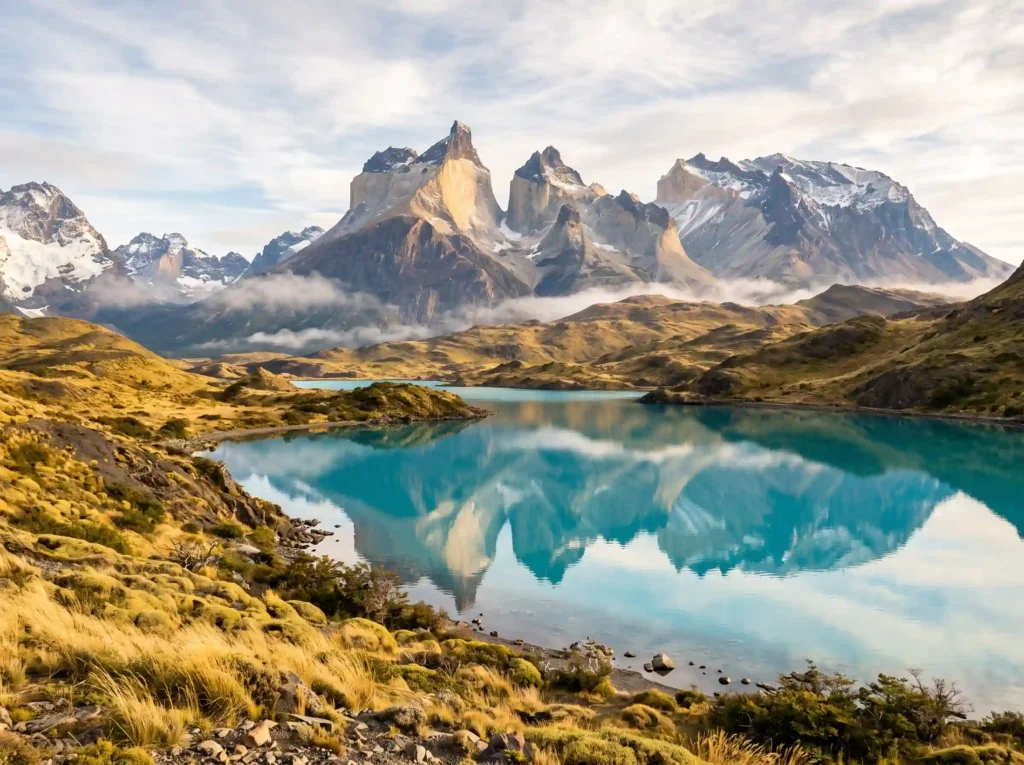
Few places concentrate this much visual drama into a single trekking route. Torres del Paine sits at the southern tip of Chilean Patagonia, where wind-shaped valleys, electric-blue lakes, and three granite spires converge. Those spires give the park its name, and the landscape around them feels almost engineered for effect.
The most popular route is the W Trek — roughly 71 to 85 kilometers — typically done in four to five days. The difficulty is moderate to demanding. The terrain requires no technical climbing, but wind can push you sideways on exposed ridgeline sections without warning. The O Circuit extends the loop into the park’s wilder, less-visited backcountry. It adds several more days and a harder crossing at John Gardner Pass, with elevation and exposure that the W Trek doesn’t reach.
Here’s what most planning guides understate: hut reservations along both routes fill months out. Vértice Patagonia and Las Torres Patagonia are the only official operators for accommodation on the W Trek and O Circuit. Popular dates in peak season — December through February — go six to ten months in advance. Booking in March for the following December is not excessive. It is normal.
The shoulder seasons deserve a serious second look. October to November and March to April bring fewer crowds and genuinely different conditions. March and April add autumn color to the valleys that peak-season visitors simply never see. The weather is less predictable, but the trail is yours in a way it won’t be in January.
Banff National Park, Canada: Glacial Lakes and Alpine Trails
Banff sits in the heart of the Canadian Rockies, and the two lakes most visitors come to see — Lake Louise and Moraine Lake — owe their color to something specific. Glacial meltwater carries fine rock flour, ground by the glaciers above. That suspended sediment scatters light in a way that produces a turquoise that looks filtered even in person. Knowing that helps when everyone asks about the color in your photos.
High-altitude trails and open passes are at their best from June through September. September into October brings larch season — the needles turn gold across the subalpine zone, crowds thin noticeably, and the light takes on a quality that summer doesn’t match. It is one of the most underrated windows to visit Banff.
One logistics detail first-timers regularly miss: private vehicles are no longer permitted at Moraine Lake or Lake Louise during peak season. Parks Canada requires advance booking for a reserved shuttle. The Discovery Pass, required for entry to all Parks Canada sites, is purchased directly through the Parks Canada website. Both steps need to happen before you arrive. The shuttle fills, and showing up without a reservation means turning back.
Yosemite National Park, California: Half Dome and the Permit Lottery
Half Dome is the hike most people associate with Yosemite — and the numbers behind it are significant. The round trip covers 22 to 26 kilometers and gains roughly 1,460 meters of elevation. Most hikers take 10 to 14 hours. The final stretch requires pulling yourself up on fixed steel cables anchored to the granite face. That section is genuinely exposed, and wet rock here has caused fatal accidents. The cables are installed from late May to early October, depending on conditions.
To reach the cables, you need a permit. The majority are distributed through a preseason lottery in March on Recreation.gov.
The rest of Yosemite Valley holds its own without Half Dome. Rock climbing on El Capitan, valley floor trails with views of Yosemite Falls and Bridalveil Fall, and deep-green meadows that make the granite walls look even more surreal are all accessible without a separate permit. But if Half Dome is the goal, start with the March lottery. Everything else is contingency planning.
Ice Caves, Glaciers, and Fjord Adventures
Vatnajökull National Park, Iceland: Blue Ice Caves and Glacier Walks
Vatnajökull covers roughly 8% of Iceland’s total land area — the largest glacier in Europe outside Greenland. The park built around it sits at the intersection of ice and fire. Active volcanoes sit directly beneath the ice cap. At the glacier’s edges, you see what that collision produces: black lava fields, braided glacial rivers, and vast outwash plains that stretch toward the coast.
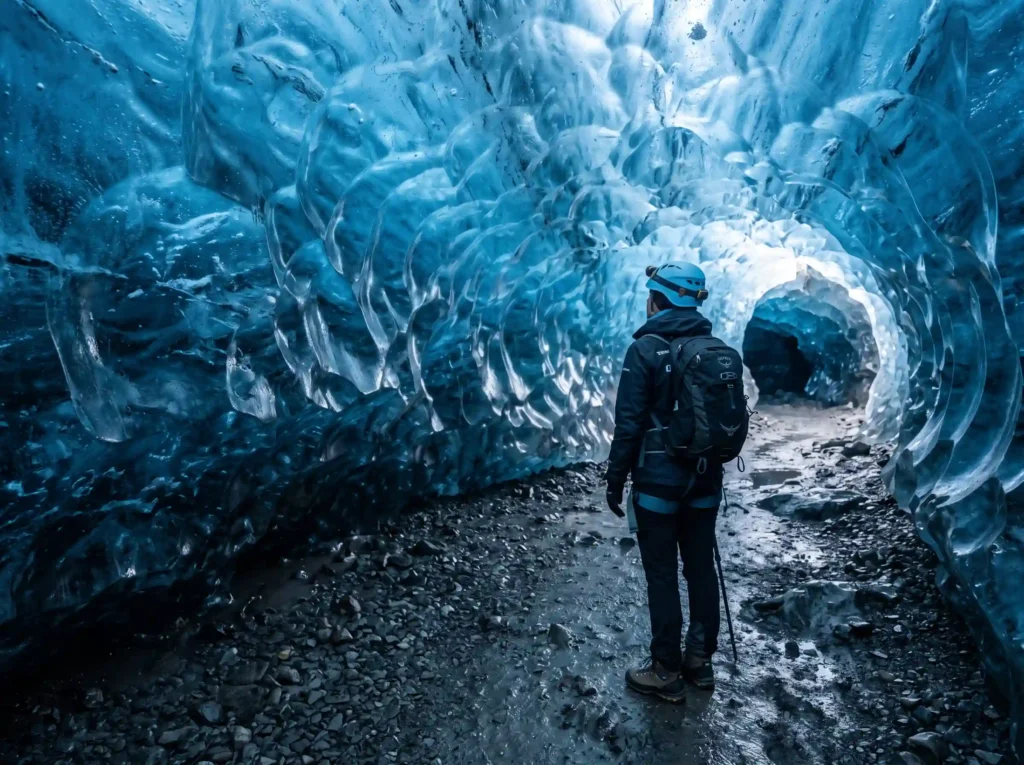
The draw for most adventure travelers is the blue ice caves. These are tunnels and chambers that form inside the glacier each winter as meltwater drains out and the remaining ice compresses into translucent blue. They are only stable and safe to enter between November and March. Outside that window, rising temperatures make the ice structure unpredictable.
One point is non-negotiable: entering the caves without a certified local guide is not permitted. This is a legal requirement, not a suggestion. Glacier surface walks are available year-round with a guided tour, but conditions vary significantly by season. Understanding what glacier travel actually involves — crevasse awareness, crampon technique, reading ice conditions — is worth researching before you arrive. Before any drive in the region, check Safetravel.is. Road conditions near Vatnajökull shift quickly, and the site aggregates real-time updates from Icelandic authorities. A 4×4 vehicle is the practical minimum for winter travel.
Fiordland National Park, New Zealand: Milford Sound Kayaking and the Milford Track
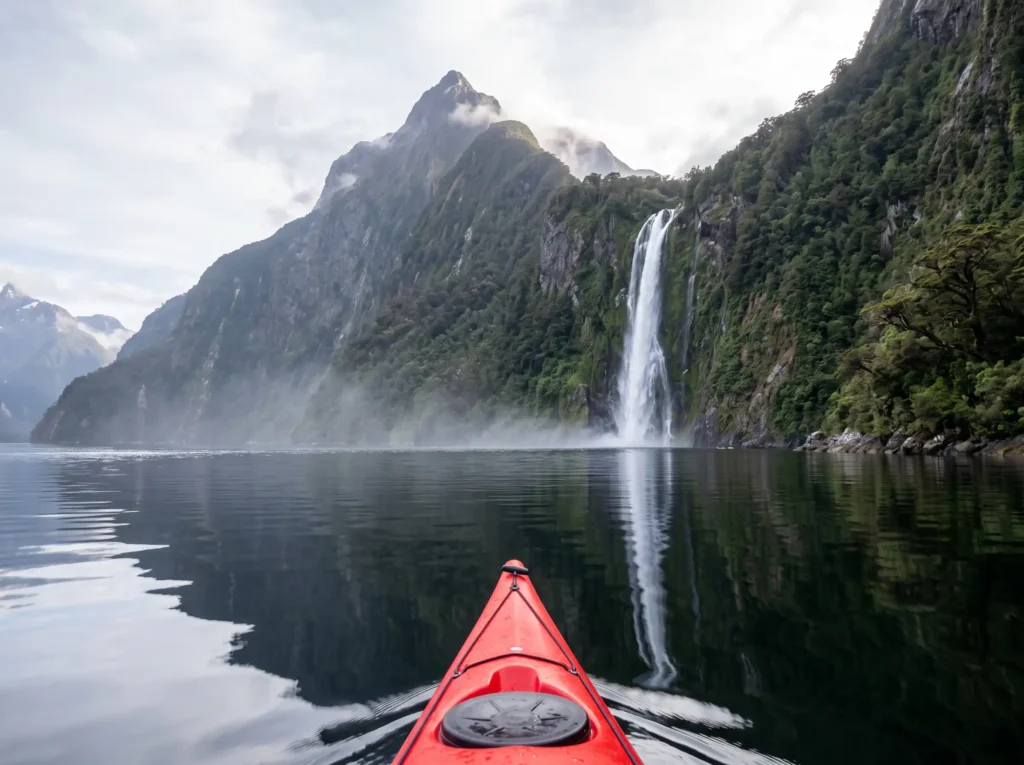
Fiordland occupies the southwest corner of New Zealand’s South Island and holds some of the least-disturbed landscapes in the Southern Hemisphere. Ancient beech and podocarp forest covers nearly every vertical surface. Waterfalls drop directly into the fiords, and the water is deep enough in places that the scale stops making sense.
Milford Sound is Fiordland’s most visited fiord, and kayaking it gives you a perspective no boat tour replicates. Guided kayak trips run three to five hours. They get you close enough to Mitre Peak and the cascading falls to feel the spray. Book the earliest departure available. The water is calmest in the morning, before the cruise ships arrive and churn the surface.
The Milford Track is a separate commitment: a four-day, 53-kilometer walk through the fiord’s backcountry, with a capped number of walkers per day. Bookings open in June for the following October-to-April season and fill within days. If the Milford Track is on your list, treat the booking date as a hard calendar event — not something to get to eventually.
Two things most guides mention but bury. Fiordland is one of the wettest places on Earth, and sandflies — small, aggressive biting insects — are relentless from October through April. DEET-based repellent works. Herbal alternatives generally don’t. Pack full waterproof layers regardless of what the forecast says. The weather here moves faster than any app can track.
Essential Booking Platforms and Permit Systems
Getting into any of these parks requires navigating multiple booking systems, often months or a full year in advance. These are the platforms that actually matter:
- Recreation.gov: The official US platform for entering the Half Dome permit lottery in Yosemite and for reserving campsites across US national parks.
- Parks Canada: The portal for purchasing the Discovery Pass required to enter Banff, and for booking mandatory shuttle reservations to Moraine Lake and Lake Louise.
- Vértice Patagonia and Las Torres Patagonia: The only official operators for hut and campsite reservations on the W Trek and O Circuit in Torres del Paine.
- Safetravel.is: Iceland’s official road and weather alert platform, essential before any journey near Vatnajökull.
The practical reality: in destinations like Torres del Paine and the Milford Track, being six months early is not conservative — it is standard. Booking ten months out for peak-season dates is not unusual. The trails are not going anywhere, but the permits are.
What Actually Makes These Parks Hard to Visit
These parks earn their reputations. Here is what the experience actually involves:
- Extreme weather variability: In Patagonia and Fiordland, the phrase “four seasons in a day” is not a travel cliché. It is an accurate description of the daily weather cycle. Packing for sun, rain, wind, and cold — in the same bag, at the same time — is not optional preparation. It is the base requirement.
- Hard access limits: Environmental protection restricts campsite quotas and trail permits to numbers the ecosystems can support. If you don’t secure a spot in the Half Dome lottery or a hut bed on the W Trek, there is no walk-in alternative. The access points close, and no amount of showing up early changes that.
- Genuine physical risk: The crevasses on Vatnajökull’s glacier surface are not visible from above. The granite on Half Dome’s cables is lethal when wet. Steep terrain and unpredictable weather combine in ways where the wrong gear or the wrong decision carries real consequences. Guided access requirements in certain zones — Vatnajökull ice caves in particular — exist because these places have claimed lives.
Understanding these realities before you leave is what separates a successful expedition from a failed one. Every park in this guide rewards those who prepare; none of them forgive those who don’t.
A morning inside a blue ice cave in Iceland. The view from the ridge above Torres del Paine at first light. The sound of a Milford Sound waterfall from the seat of a kayak. These experiences justify everything that went into reaching them. Start the booking process earlier than feels necessary. You will not regret it.
Sources
- Torres del Paine National Park – Official Site
- Torres del Paine – Information and Planning Portal
- Parks Canada – Official Site
- National Park Service – US National Parks
- Recreation.gov – US Permits and Reservations
- SafeTravel Iceland – Safety and Road Conditions
- Guide to Iceland – Official Iceland Tourism Portal
Quick Comparison
| Park | Country | Primary Challenge / Key Trail | Booking Platform / Requirement | Best Travel Window |
|---|---|---|---|---|
| Torres del Paine | Chile | W Trek / O Circuit; exposed ridgeline winds | Vértice Patagonia & Las Torres Patagonia | October to April (Peak: Dec–Feb) |
| Banff National Park | Canada | Glacial lakes & alpine trails; peak season crowds | Parks Canada (shuttle & Discovery Pass) | June to October (Larch season: Sep–Oct) |
| Yosemite National Park | United States | Half Dome cables; extreme elevation & wet granite hazards | Recreation.gov (cables permit lottery) | Late May to early October |
| Vatnajökull National Park | Iceland | Glacier crevasses; winter road safety | Certified local guide (mandatory for ice caves) | November to March (for ice caves) |
| Fiordland National Park | New Zealand | Milford Track; extreme rainfall & relentless sandflies | NZ Department of Conservation (Milford Track) | October to April |
Frequently Asked Questions
When do I need to book accommodation for the W Trek in Torres del Paine?
You should book your accommodation six to ten months in advance, especially for the peak season of December through February. Reservations must be made directly through the official operators, Vértice Patagonia and Las Torres Patagonia.
Can I drive my own vehicle to Lake Louise and Moraine Lake in Banff?
No, private vehicles are not permitted at Moraine Lake or Lake Louise during the peak season. You must book a shuttle in advance through Parks Canada and purchase a Discovery Pass for entry.
How do I get a permit to hike Half Dome in Yosemite?
Day-use permits for the Half Dome cables are distributed through a preseason lottery in March on Recreation.gov. If you miss this window, a daily lottery is also available during the hiking season, with applications accepted two days before your planned hike.
Do I need a guide to visit the blue ice caves in Vatnajökull National Park?
Yes, entering the ice caves without a certified local guide is legally prohibited. Additionally, you should consult Safetravel.is for real-time road conditions and weather alerts before driving in the region.
When do bookings open for the Milford Track in New Zealand?
Bookings for the Milford Track open in June for the upcoming October-to-April season. Because slots are strictly limited, you must treat the opening date as a firm deadline since passes sell out within days.
