
There’s a specific kind of exhaustion that hits mid-trip — usually around day three or four. You realize the itinerary you spent weeks building is running you, not the other way around. You’re up at 7am to make a museum opening time, speed-walking between neighborhoods, and going to bed too tired to process any of it. The destination is beautiful. You’re just too scheduled to notice.
The difference between a good trip and a great one usually isn’t the destination. It’s the plan behind it. Not a packed plan — a smart one. One that knows what to skip, what to protect, and where to leave room for the unexpected. This is how to build one.
How to Build a Travel Itinerary That Actually Works
Trip planning works best as a series of deliberate stages — moving from what you want to experience, through the practical limits of time and money, to a day-by-day structure that actually holds together on the ground. Skipping any stage is where most itineraries start to fall apart.
Start With What You Actually Want — Not What You Think You Should See
Most people begin trip planning by searching “top things to do in [city]” and working their way down a list. The result is an itinerary built around other people’s priorities, not theirs.
Start differently. Before you open a browser tab, write down what you want to feel on this trip. Do you want to eat your way through local markets? Spend long afternoons in museums? Cover ground across multiple cities? Or genuinely slow down? Getting clear on this shapes every decision that follows.

If you’re traveling with others, have each person name their five or six non-negotiables — the things they’d genuinely regret missing. Lay those lists side by side. The overlap becomes the trip’s backbone. Everything else is negotiable.
One thing most people overlook: experiences that sound unmissable on paper often feel underwhelming in person, while a low-key local spot you stumble into becomes the story you tell for years. Leave room for both — the researched anchors and the unexpected.
Set Your Budget and Constraints Before Booking Anything
The most common planning mistake isn’t picking the wrong destination. It’s starting to book things before knowing what you can actually spend.
Set your total budget first. Not just for flights and hotels — include food, transport, activities, and a buffer for the costs that always catch you off guard. Airport meals, midnight taxis, a boat tour that seemed like a great idea: these add up fast. Once you know your ceiling, the decisions get much easier.
Also do this before booking: check the local calendar. National holidays, school breaks, and religious festivals can close museums, spike accommodation prices, and double your transit time. Some attractions close one day a week — often Monday. Find out before you arrive, not after.
And check the weather properly. Not just “is it warm” — but whether the things you actually want to do are enjoyable in the season you’re visiting. Hiking in monsoon season or sightseeing in 40°C heat is technically possible. It’s just not particularly fun.

Group Activities by Location, Not by Theme
Here’s where most itineraries fall apart: people group activities by interest category — all the museums on one day, all the beaches on another — rather than by geography. The result is a full day of fascinating sights spread across three different neighborhoods, with an hour of transit between each one.
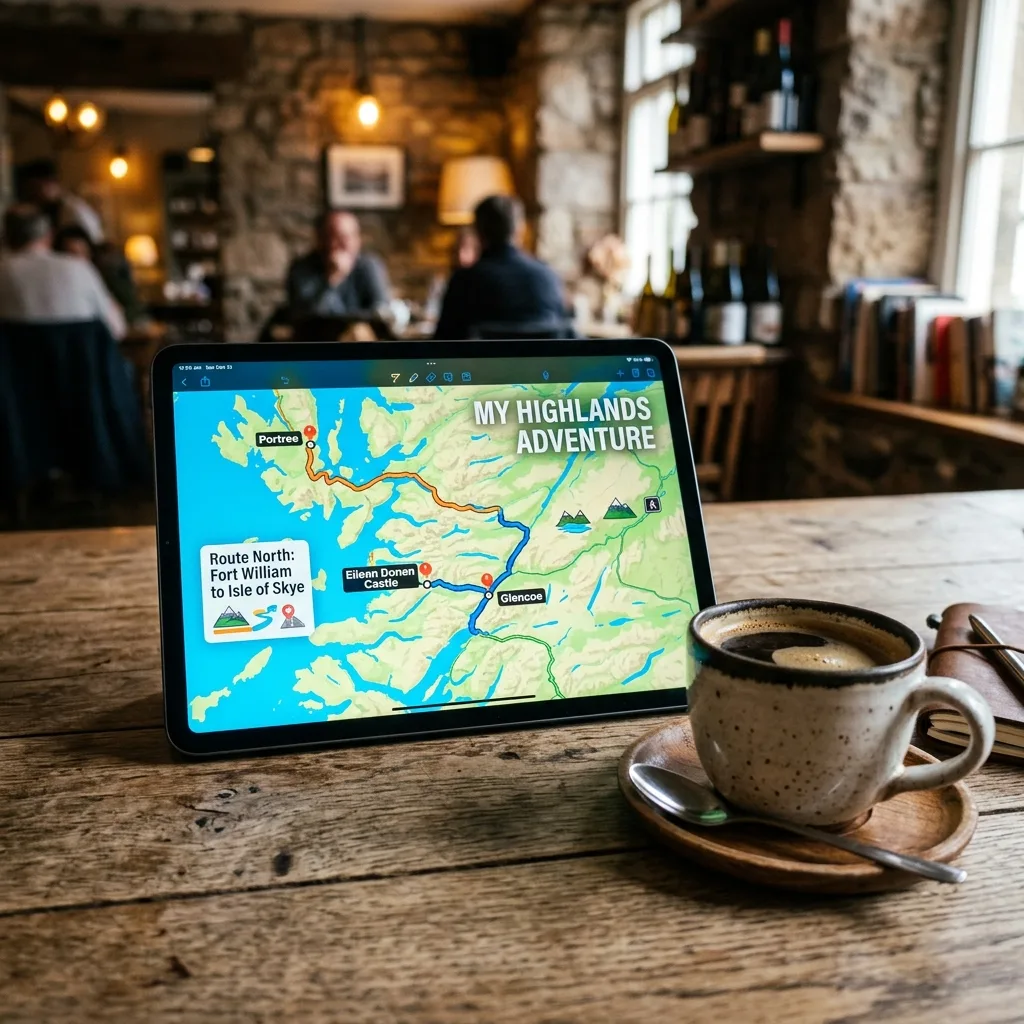
Plot every place you want to visit on a map before you assign them to days. Pin your accommodation, your must-see attractions, your restaurant shortlist, everything. Then look at what’s actually close to each other.
Build each day around a geographic zone. In a city, that might mean one day per district. On a road trip, it means planning stops that flow in one logical direction rather than backtracking. In practice, this approach saves 30 minutes to two hours of transit per day. That time is far better spent actually being in the places you traveled to see.
One detail that almost never appears in planning guides: factor in the time it takes to leave a place, not just arrive. Waiting for a bill, finding a taxi, getting through a security line — these micro-gaps add up to 20 or 30 minutes between almost every transition. Build that in.
Build Each Day Around Anchor Experiences, Not Activity Volume
This is the mindset shift that changes everything.
Instead of asking “how many things can we fit into Tuesday?” ask “what is the one experience on Tuesday that we absolutely cannot miss?” That’s your anchor. Book it, protect it, build the rest of the day loosely around it.
One or two major anchors per day is realistic for most travelers. Three is the ceiling. And only if they’re close together and none require significant physical or mental energy. Beyond that, you’re not traveling anymore. You’re checking boxes.
For high-demand attractions — popular museums, famous restaurants, guided tours, overnight trains — book in advance. How far ahead depends on the destination and the season. For anything with a known waitlist or limited capacity, two to four weeks is a reasonable minimum.
For everything else, resist the urge to pre-book. Locking too many things into rigid time slots removes your ability to adjust when something takes longer than expected — and something always does.
The Best Tools for Planning a Travel Itinerary
Good tools don’t plan your trip for you. They take the logistics out of your head so you can focus on the decisions that actually matter. These four are worth knowing, and most experienced travelers use two or three of them in combination.
Wanderlog — Visual Planning and Group Collaboration
Wanderlog is built specifically for active itinerary building. You drag destinations onto an interactive map, build a day-by-day schedule, log expenses, and share the whole plan with travel companions in real time. For group trips where multiple people are contributing ideas and preferences, the collaborative features alone make it worth using. It also imports Google Maps searches directly, which removes a lot of copy-paste friction during the research phase.
TripIt — Keeping Your Bookings Organized
Once you start making reservations, TripIt does the tedious work of pulling them together. Forward your confirmation emails — flights, hotels, rental cars, restaurant bookings — and it compiles everything into a single chronological timeline. The paid version adds real-time flight alerts and gate change notifications. If your trip involves multiple flights or complex connections, that upgrade is worth the cost.
Google My Maps — Custom Route Mapping
Google My Maps lets you build layered, color-coded maps of your entire trip: different colors for accommodation, restaurants, attractions, and day trip routes. It’s free, it syncs to your phone’s Google Maps, and it handles the visual research phase better than almost anything else. The limitation is that it has no scheduling function, so treat it as a companion to a planner, not a replacement for one.
Spreadsheet Templates — Complete Control
If you want to manage every variable in one place — budgets, packing lists, transport details, backup options — a well-built spreadsheet is hard to beat. Google Sheets and Microsoft Excel both have travel template libraries worth browsing. The upside is total flexibility. The trade-off is more setup time than a dedicated app, and no live data integration. Whether that trade-off is worth it depends on how much you like having everything exactly where you put it.
How to Avoid Over-Scheduling and Travel Burnout
Travel burnout is real, and it doesn’t only happen to people on long trips. A five-day city break can produce it just as reliably as a three-week expedition, if the pacing is wrong.
The symptom everyone recognizes is physical exhaustion. But burnout usually starts earlier — and more subtly. It shows up first as a loss of genuine curiosity. A vague dread when you look at tomorrow’s schedule. Going through the motions of sightseeing without really absorbing any of it. By the time you’re physically exhausted, the emotional detachment has usually been building for a day or two already.
The 60% Rule
Schedule no more than 60% of your available hours each day. The remaining 40% stays deliberately empty. Not “we’ll figure it out” empty. Genuinely unplanned, no obligations, free to go wherever the day takes you.
In practical terms, for most travelers that means two to three anchor activities per day, with the evenings or an afternoon block left open. Experienced travelers say it consistently: the unscheduled time is often where the best memories come from. A neighborhood you wandered into by accident. A conversation with a local. A market you found because you had nowhere particular to be.

Deliberately planning “do-nothing” blocks isn’t laziness. It’s how you actually process what you’re seeing.
Spend More Time in Fewer Places
One of the clearest markers of inexperienced trip planning is trying to cover too much ground. Moving accommodation every one or two nights sounds efficient. In practice, it means spending a chunk of each day packing, checking in, checking out, orienting yourself. That’s not travel. That’s logistics.
Spending at least two consecutive nights in each destination changes the experience. By day two, you know where to get coffee, which streets to avoid at rush hour, and what you want to go back to. That’s when a place starts to feel like somewhere you actually visited — not just passed through.
Quality of experience outweighs quantity of places visited. Every time.
Signs You’re Heading Toward Burnout
These tend to appear in order:
- Irritability with small inconveniences — a slow waiter, a crowded platform, a queue longer than expected — starting to feel genuinely disproportionate.
- Loss of curiosity — walking into somewhere new and feeling nothing, or realizing you’d rather look at your phone than what’s in front of you.
- Physical fatigue that sleep doesn’t fix — especially waking up tired after eight hours of rest.
- Dreading tomorrow’s schedule — looking at what you planned and feeling heaviness instead of anticipation.
If two or more of those show up on the same day, call it. Take an unplanned rest day. Stay in the neighborhood, eat slowly, do nothing itinerary-worthy. You won’t regret it. The place will still be there.
The best itinerary you’ll ever build is the one where, on the last day, you can’t believe how much you saw. And you also can’t believe how rested you feel. That combination isn’t luck. It’s the result of planning less than you think you need to, booking what matters, and leaving the rest open. The trip that goes exactly according to plan and the trip worth remembering are rarely the same trip.
Sources
- Big World Small Pockets
- Where in the World is Tosh
- Bon Voyage Book Box
- Traveling Tessie
- Bon Traveler
- Wonder and Sundry
- Lux Life London
Quick Comparison
| Tool / Option | Best For | Key Features | Main Limitation |
|---|---|---|---|
| Wanderlog | Visual planning and group collaboration | Interactive mapping, day-by-day scheduling, expense tracking, and real-time sharing | Not mentioned |
| TripIt | Keeping bookings organized | Compiling flight, hotel, and rental reservations into a chronological timeline | Real-time flight alerts require a paid upgrade |
| Google My Maps | Custom route mapping | Layered, color-coded custom maps syncing to phone’s Google Maps | No scheduling function |
| Spreadsheets (Google Sheets / Microsoft Excel) | Complete control over budgets, packing, and logs | Total flexibility with travel template libraries | More setup time and no live data integration |
Frequently Asked Questions
How do I start planning a travel itinerary?
Start by defining what you want to feel on the trip and listing five or six non-negotiables for each traveler. This helps you build the core backbone of the trip based on your personal priorities rather than simply copying online listicles of generic top attractions.
Why should I group activities by location?
Grouping activities by geography instead of interest category prevents you from wasting hours in transit between distant neighborhoods. In practice, this structured approach can save between thirty minutes and two hours of transit time each day.
What is the 60% rule in trip planning?
The 60% rule advises scheduling no more than 60% of your daily hours with planned activities, leaving the remaining 40% completely empty. This unscheduled block prevents physical and emotional exhaustion while creating opportunities for spontaneous discoveries.
How many anchor experiences should I plan per day?
Planning one or two major anchor activities per day is realistic and recommended. Three anchor experiences is the absolute ceiling, and only if they are physically close together and do not require significant mental or physical energy.
What are the first signs of travel burnout?
Burnout usually starts with irritability over minor inconveniences and a subtle loss of curiosity. It then progresses to physical fatigue that a full night of sleep cannot resolve, and a feeling of dread when reviewing the next day’s itinerary.