
Few things kill a trip faster than a stolen wallet, an expired passport at check-in, or a stomach bug that wrecks the first three days. None of that is bad luck, really — it’s almost always something a little preparation could have prevented. The good news: most travel risks fall into a handful of categories. Once you know what to watch for, protecting your documents, money, and health stops feeling complicated. Here’s what actually works, drawn from official travel advisories, embassy guidance, and the patterns security experts see again and again.

Solid Preparation Is the Foundation of a Safe Trip
A safe trip starts weeks before you ever reach the airport. The paperwork, the vaccinations, the insurance — none of it is exciting, but skipping it is exactly how small problems turn into a ruined vacation. Handle this part properly and the rest of the trip gets a lot easier.
Check Document Validity and Make Digital Backups
Check your passport’s expiration date at least eight weeks before departure. This matters more than most travelers realize. Many countries require your passport to stay valid for at least six months after your entry date — not just for the length of your stay. Show up with four months left on a passport that looks perfectly fine to you, and you can still be turned away at the gate.
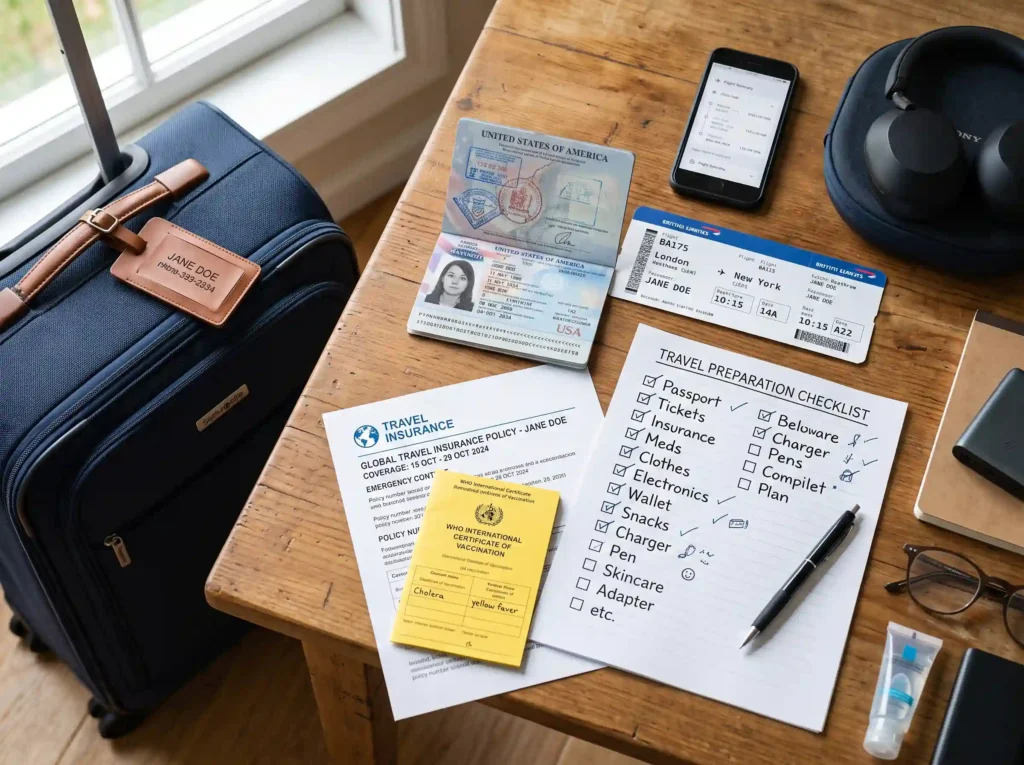
Make copies of your passport, visa, vaccination certificate, and driver’s license, and pack them separately from the originals. Better yet, store digital scans somewhere you can reach from anywhere — a secure cloud folder or an encrypted USB stick works well. If the originals are ever lost or stolen, having these on hand speeds up getting replacements at the nearest embassy considerably.
Register for Free Crisis Alerts Before You Go
Check your foreign ministry’s travel advisories before booking anything irreversible. Look closely at entry requirements for your destination too — they change more often than people expect. German citizens can register for free with ELEFAND, the Federal Foreign Office‘s crisis preparedness list. It sounds bureaucratic, but it matters. If a natural disaster or sudden political unrest hits while you’re there, the authorities know exactly where you are. They can warn you directly or help coordinate an evacuation. Travelers holding a different passport should check whether their own foreign ministry runs something similar — many do.
Get Travel Health Insurance and See a Travel Doctor

International travel health insurance, including coverage for a medically necessary repatriation flight, isn’t optional in any meaningful sense. Statutory health insurance back home typically won’t cover these costs abroad, or covers only a fraction of them. Book an appointment with a travel medicine doctor early enough to refresh routine vaccinations and get any destination-specific ones. Then pack a properly stocked medical kit — something for pain, fever, insect bites, and stomach issues. A surprising number of travelers deal with at least one of these in the first week.
Protecting Your Money and Valuables on the Road
Tourists make easy targets. Distracted by a new city, busy taking photos, unfamiliar with the layout. Pickpockets and scam artists know exactly what that looks like, and they’re good at spotting it. Splitting up your money and valuables sensibly is one of the simplest ways to limit how much you can actually lose.
Split Up Your Cash and Cards
Never carry your entire cash supply or every card you own at once. As soon as you check in, use the hotel safe for documents you don’t need that day, spare cash, and anything valuable like jewelry. Keep only what you’ll actually use tucked into a closed inner pocket, close to your body — not a back pocket, not an open tote. And resist the urge to show off anything expensive. A flashed watch or camera draws exactly the kind of attention you don’t want.
Save Emergency Hotlines to Your Phone
If a card does get lost or stolen, speed matters. Save the central card-blocking hotline, 116 116 (or +49 116 116 from outside Germany), directly into your phone before you leave. Add your insurance provider’s emergency number and the contact details for the nearest German embassy while you’re at it. Five minutes now saves a frantic search later.
Smart Everyday Habits and Digital Security
Once you’re actually there, staying alert and a little unremarkable does most of the work. Criminals look for easy targets, not careful ones. Data protection deserves the same attention — it’s just as easy to overlook on vacation as it is to take seriously.
Stay Alert in Crowded Tourist Spots
Famous landmarks, markets, beaches, train stations — anywhere people are packed together and distracted gives thieves an opening. Keep your bag in sight at all times. Never set it down loose on the floor. In dense crowds, wear backpacks on your front, not your back. And buy tickets or tours only from official outlets, never from someone selling them on the street.
Lock Down Your Devices and Data
Most travelers think about pickpockets and never think about Wi-Fi. That’s the gap that actually gets exploited. Hotel and airport networks are public, which means anyone with the right tools can potentially see what you’re typing — including your passwords. Use an encrypted VPN connection any time you’re on one of these networks. It’s a small habit that closes a real hole. A wallet with RFID-blocking lining is worth adding too; it stops anyone from skimming your contactless card data just by walking past you.
Reducing Health Risks Wherever You Travel
Safety isn’t only about avoiding crime. Your body has to deal with unfamiliar germs, climates, and local pathogens too. That side of travel safety gets overlooked far more often than it should.
Stick to Safe Food and Water Habits
In a lot of regions outside Central Europe, tap water simply isn’t drinkable. Use only boiled or bottled water, even for brushing your teeth or washing dishes. Skip the ice in your drink too — it’s usually made from the same tap water you’re avoiding. For food, the old rule still holds up: cook it, peel it, or leave it. Raw, unpeeled produce is the most common way travelers pick up a stomach bug that wrecks the first half of a trip.
Protect Yourself From Mosquito-Borne Disease
In tropical and subtropical regions, mosquitoes carry serious diseases — malaria, Zika, and dengue fever among them. Dusk and nighttime are when mosquitoes are most active, so that’s when protection matters most: long, light-colored clothing and a properly applied repellent. In higher-risk areas, sleep under an intact mosquito net every night, not just when you remember to.
How to Handle a Genuinely Dangerous Situation
Despite every precaution, you might still end up somewhere genuinely dangerous — a robbery, an unstable situation, something you didn’t see coming. If that happens, one rule matters more than any other.
Don’t play hero. If someone threatens you and demands your valuables, hand them over without a fight. Nothing in your bag is worth more than your safety. Follow instructions from local security forces, and keep your distance from cordoned-off areas. Steer well clear of political demonstrations or large crowds — they can turn unpredictable fast. It also helps to check in regularly with someone back home about your route and where you currently are. That overlaps with broader trip-safety planning, like knowing your embassy’s location and emergency number before you need them, which deserves its own closer look.
Bringing It All Together
There’s no such thing as a completely risk-free destination. There never has been. But structured preparation, combined with a reasonable level of attentiveness once you’re there, makes almost anywhere in the world safe to explore. Back up your documents digitally. Split up your money sensibly. Register with your country’s crisis system if one exists. Stick to the basic hygiene rules even when they feel like overkill. Do that, and you’ve covered the part of travel safety that’s actually within your control.
Sources
- Federal Foreign Office — Tips for Preparing and Carrying Out Your Trip
- Police Crime Prevention — Safety Around Your Vacation
- Malteser Magazine — The Most Important Tips for a Safe Trip
- ADAC e.V. — Complete Travel Checklist for Your Vacation
- ERV Travel Insurance — Tips for Traveling Safely
Frequently Asked Questions
How long must a passport be valid for international travel?
Many countries require your passport to stay valid for at least six months after your entry date, rather than just for the duration of your stay. Checking your passport’s expiration date at least eight weeks before departure helps ensure you are not turned away at the gate.
What is the ELEFAND crisis prevention list?
ELEFAND is a free crisis preparedness list provided by the German Federal Foreign Office. Registering allows authorities to know your location during a natural disaster or sudden political unrest so they can warn you directly or coordinate emergency assistance.
How can I protect my bank cards and money while traveling?
You should split up your cash and cards instead of carrying everything at once, utilizing your hotel room safe for spare items. Additionally, keep your active money in a closed inner pocket close to your body and save emergency card-blocking numbers to your phone in advance.
What number should I call if my bank card is stolen abroad?
If your card is lost or stolen, you can call the central card-blocking hotline at 116 116, or +49 116 116 when calling from outside Germany. Saving this number and your insurance provider’s contact info to your phone beforehand ensures a quick response.
How do I avoid getting sick from food and water during a trip?
Avoid drinking tap water or using ice made from it, opting instead for bottled or boiled water even when brushing teeth. For meals, follow the classic rule to cook it, peel it, or leave it, as raw or unpeeled produce is a frequent cause of stomach bugs.